
Battery Storage Is a Health Issue: What’s Happening Across Washington
Discover how Battery Energy Storage Systems (BESS) are shaping Washington's clean energy transition, improving air quality, and advancing public health.
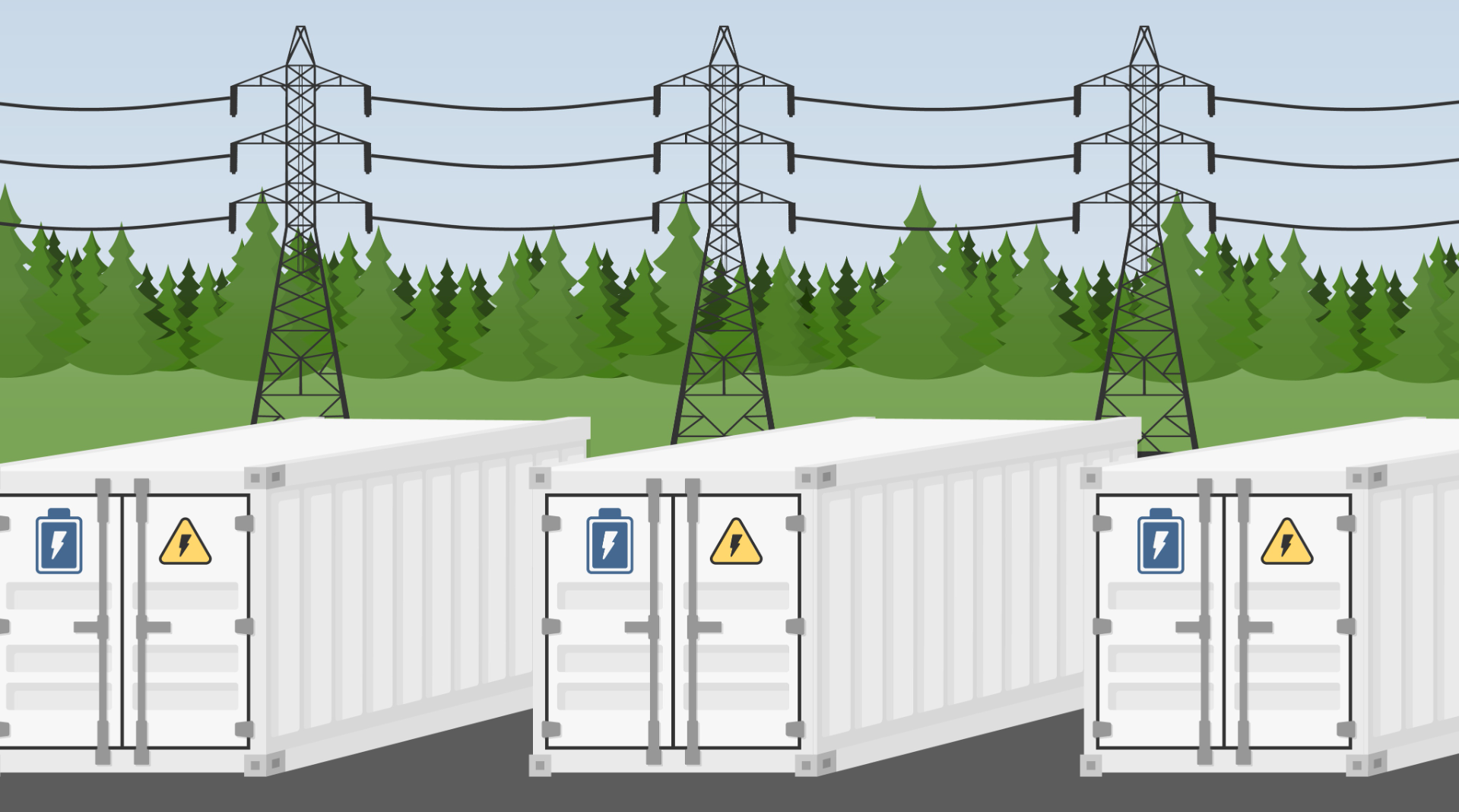
Image courtesy of the Washington State Department of Ecology
Across Washington state, the shift toward clean, resilient energy is moving from high-level climate goals to real, local policy decisions. At the heart of this transition are Battery Energy Storage Systems (BESS).
Washington's transition to a clean energy system does not end with building more wind and solar power. The state also needs ways to store that energy and deliver it when people need it most. By storing excess clean energy generated from wind and solar and dispatching it when demand peaks, BESS allows communities to build a stable, fossil-fuel-free grid.
After unanimously passing a Solar and BESS ordinance in Pierce County last week, advocates are continuing to rack up wins for renewable energy across Washington. Here’s an update on where BESS policy currently stands, why health advocates are championing these projects, and how WPSR members are driving progress.
What’s Going On? The BESS Policy Landscape
Local governments and state agencies are establishing rules for how and where battery storage projects are built. Several important BESS policy processes are underway across Washington:
Pierce County (Passed!): On September 15, 2026, the Pierce County Council unanimously passed the updated Solar & BESS Ordinance! The process included hours of public testimony and 82 letters of support. The ordinance establishes county regulations for battery energy storage facilities while implementing policies supporting renewable and distributed energy.
Thurston County: The proposed Centralia Project, remains the subject of local review and public proceedings. The project would provide 127 megawatts of power with 508 megawatt-hours of storage on an approximately 84-acre site near Centralia. Thurston County held public hearings in September concerning the project's SEPA determination and special-use permit.
City of Sumner (BESS 2.0 Ordinance): Sumner has been developing a new zoning framework for BESS that establishes different requirements based on the scale of the facility. The proposed framework covers small-, mid-, and large-scale systems and regulates them according to zoning districts and surrounding land uses.
Washington Department of Ecology (Statewide PEIS): The department is studying stand-alone utility-scale lithium-ion BESS generally across Washington, with the goal of identifying potential environmental impacts and mitigation measures. They have initiated a process for public scoping comments which are open through October 1, 2026. Comments will shape how environmental and health impacts are evaluated across Washington.
Why Does WPSR Care? A Public Health Imperative
BESS facilities store electricity when generation is high and discharge it when demand rises or renewable generation falls. That flexibility can help integrate renewable energy, strengthen the electric grid, and reduce reliance on fossil-fuel generation.
For WPSR, battery storage is not simply an energy technology issue. It is a public health issue.
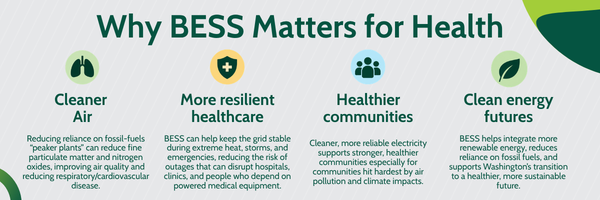
Combating the Climate Crisis: Rapidly decarbonizing the grid is essential to slowing global warming and mitigating the severe public health impacts of climate change. BESS eliminates the intermittency barrier of renewable energy, allowing solar and wind to power our communities 24/7.
Cleaner air: Peak electricity demand is often met by fossil-fuel "peaker plants," which release heavy loads of particulate matter (PM2.5), nitrogen oxides (NOx), and other toxic pollutants. Replacing peaker plants with clean battery storage can improve regional air quality and reduces asthma, cardiovascular disease, and respiratory illness.
A more resilient electric grid: Extreme weather events increasingly strain our electrical grid. Battery storage buffers local grids against power outages that threaten hospital operations and disrupt access to medical equipment and services. At home, an outage can affect people who depend on electricity for oxygen concentrators, refrigerated medications, mobility equipment, heating, cooling, and other essential needs. Ecology also identifies grid support and emergency power among the potential benefits of BESS.
Washington cannot fully decarbonize its electricity system simply by adding renewable generation. Wind and solar generation vary over time, while electricity demand does not. Energy storage can help bridge that gap by shifting electricity from periods when renewable generation is abundant to periods when electricity is needed. That makes storage an important piece of reducing reliance on fossil-fuel generation and building a cleaner energy system.
What is WPSR doing and what can you do?
WPSR volunteers have been working alongside the Yes2BESS Coalition to bring health expertise into these local and statewide policy discussions.
That work has included:
Providing expert testimony at county council and planning commission hearings.
Mobilizing health professionals and community members to submit letters of support.
Supporting grassroots outreach in Pierce County, Thurston County, and Sumner.
Participating in coalition discussions about responsible BESS policy.
Engaging in the Washington Department of Ecology's statewide PEIS scoping process.
Health professionals have an important role to play in these conversations. Community decisions about energy infrastructure ultimately affect the conditions in which people live, work, receive medical care, and recover from emergencies. Your continued advocacy is needed:
Comment on Ecology's statewide BESS PEIS. Ecology is accepting comments on the scoping document through October 1, 2026, at 11:59 p.m. The agency is asking the public to help identify what impacts should be studied and how those impacts can be avoided, reduced, or mitigated.
Attend the Yes2BESS Webinar Series: Join the upcoming educational sessions starting October 5, 2026, to learn more about energy storage basics, safety standards, and local organizing strategies. Visit yes2besswa.org
Take Action in Your Community: If you live in Thurston County or the City of Sumner, reach out to your local decision-makers or sign up to testify at upcoming hearings.
Join the WPSR Climate & Health Task Force: Stay involved in ongoing clean energy advocacy by connecting with WPSR's health advocate network.
Sign the statewide Yes2BESS petition. Adding your voice can help demonstrate public support for responsible battery storage as Washington builds a cleaner and more resilient electricity system.
Washington's transition away from fossil fuels will require more than replacing one power source with another. It will require an energy system that is cleaner, more resilient, and capable of protecting people during the increasingly difficult conditions created by climate change. Battery storage is one part of that system. WPSR will continue working with the Yes2BESS Coalition to bring the voices of health professionals into these conversations and advocate for an energy system that protects public health, strengthens resilience, and reduces reliance on fossil fuels.