Under Fire in Eastern Washington: Why Wildfire Season is a Climate and Health Crisis
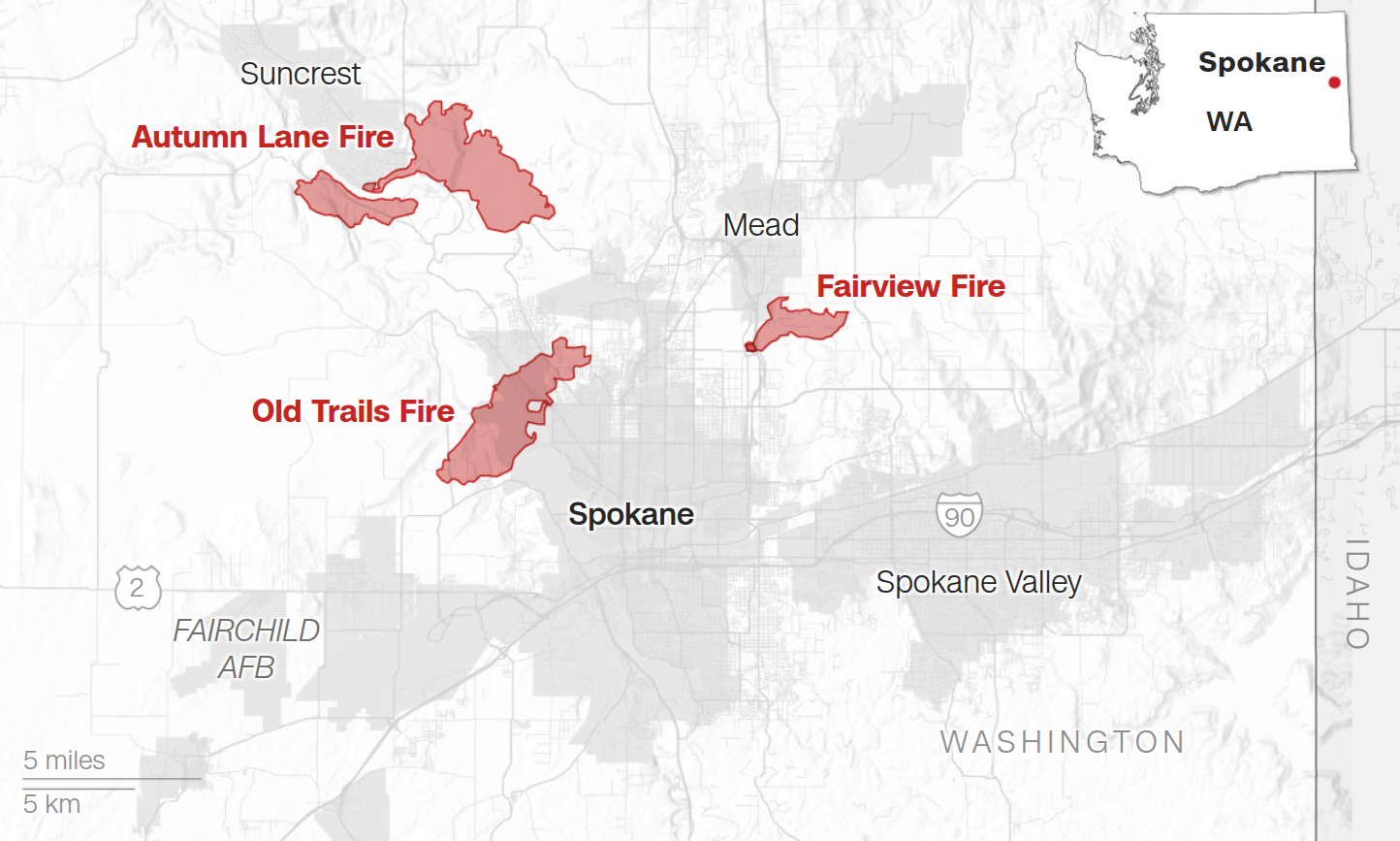
Over the weekend, expansive wildfires ravaged Eastern Washington, cementing this season as one of the worst on record for our state. At Washington Physicians for Social Responsibility (WPSR), our hearts and minds remain with every person, family, and community affected by this ongoing disaster.
The human cost of these fires is staggering. Thousands of homes, livelihoods, and lives have been permanently altered. The evacuation of Spokane’s VA hospital highlights a dangerous reality: climate events directly threaten the critical medical infrastructure required to care for communities during emergencies.
In times like these, health professionals and local communities must step up to care for one another, manage immediate risks, and address the root causes driving these disasters.
The Scale of the Crisis
The reality on the ground in Eastern Washington points to a rapidly shifting baseline for extreme weather across the region:
Scope of destruction: Over 700 structures have been destroyed across fires burning more than 700 square miles.
Mass displacement: More than 60,000 people have been forced from their homes.
Persistent drought: Washington is currently navigating its fourth consecutive drought emergency.
Extended fire seasons: Driven by climate-induced heat and dryness, Washington now experiences 21 more fire weather days per year than it did in the 1970s.
Protecting Health and Supporting Recovery
Wildfire smoke respects no geographic boundaries, and smoke-related fine particle pollution from Eastern Washington is expected to impact air quality across the Puget Sound region. Taking immediate, practical measures can help safeguard individual and public health.
Protecting Yourself and Your Family
Monitor Air Quality: Check local Air Quality Index (AQI) forecasts before planning outdoor activities.
Reduce Exposure: Limit strenuous outdoor physical activities during poor air quality events.
Use Proper Filtration: Keep windows and doors closed. When prolonged outdoor exposure is unavoidable, wear a well-fitted N95 respirator.
Hydrate: Maintain adequate hydration to help the body process environmental stressors.
Supporting Your Community
Check Vulnerable Neighbors: Reach out to elderly residents and individuals with pre-existing medical conditions who may need extra support.
Share Verified Information: Distribute trusted smoke safety and local emergency resources.
Support Local Relief: Contribute to organized regional aid efforts assisting displaced Spokane residents.
Key Local Emergency Resources
Evacuation & Tracking Maps: SREC Evacuation Map | Alert Spokane | Spokane County Emergency Management | WA Department of Natural Resources Wildfires Page
The Broader Impact: Wildfires as a Public Health Threat
Wildfires represent one of the most direct health impacts of fossil fuel pollution in Washington. Continued greenhouse gas emissions warm the climate, shrink snowpack, and lengthen droughts—creating the exact conditions that allow fires to grow larger, spread faster, and burn longer.
“Fossil Fuel Emissions ➔ Warming & Extended Drought ➔ Extreme Wildfires ➔ Severe Air Pollution & Health Risks”
The Air Quality and Human Cost
Wildfires release massive amounts of fine particulate matter (PM 2.5), which penetrates deep into the lungs and enters the bloodstream:
Surging Exposure: The number of people in the U.S. experiencing at least one day per year with smoke pollution three times higher than the EPA standard has increased 27-fold over the past decade.
Acute & Chronic Health Risks: Wildfire smoke significantly elevates the risk of asthma attacks, heart attacks, strokes, COPD exacerbations, pregnancy complications, and premature death.
Ecosystem Damage: Intense blazes compromise resilient forests, reducing their long-term ability to store carbon and support regional biodiversity.
Moving From Crisis to Prevention
While not every wildfire can be prevented, systemic action can reduce the pollution driving longer, more destructive fire seasons while strengthening healthcare infrastructure against future emergencies.
Here is how you can get involved:
Join the Extreme Heat Workgroup: Meets virtually every month to address localized heat risks.
Participate in WPSR’s Climate & Health Task Force: Help shape state-level climate policy focused on public health protections.
Advocate for Accountability: Urge elected leaders to hold major polluters accountable for damages caused by fossil fuel emissions.
We cannot build a healthier Washington without addressing the environmental conditions impacting our health today. Thank you for standing alongside WPSR in advocating for a safer, more resilient state.