
Stopping the Deployment of New ICBMs
The United States is in the midst of a sweeping effort to replace and upgrade its entire nuclear arsenal. Among these efforts, the plan to replace the land-based intercontinental ballistic missiles (ICBMs) stands out as the most indefensible—strategically unnecessary, fiscally reckless, and morally alarming.
ICBMs are long-range nuclear missiles housed in underground silos, designed to be launched within minutes and capable of traveling thousands of miles to deliver thermonuclear warheads. The proposed new system will deploy modernized warheads with destructive power many times greater than the bombs used in World War II. These are not weapons of deterrence alone—they are instruments of mass annihilation on an unimaginable scale.
The projected cost of replacing the ICBM force has already surged dramatically, now estimated in the hundreds of billions of dollars over its lifecycle—an increase of roughly 80% over earlier projections. At a time of urgent human and environmental needs, this represents a profound misallocation of national resources.
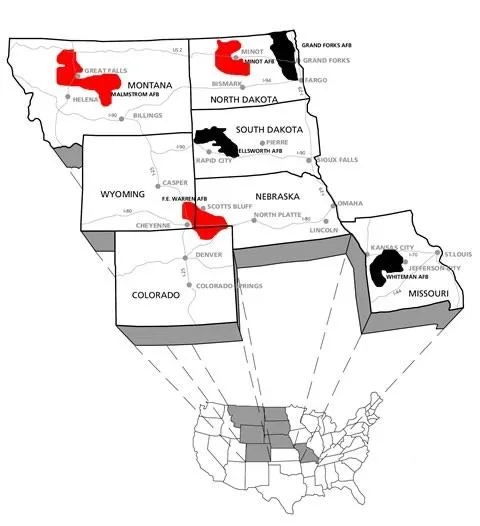
Currently, 400 ICBMs are deployed across five states—Montana, Wyoming, North Dakota, South Dakota, and Colorado. They are concentrated in relatively small geographic clusters within these states, posing an extreme risk to these communities that have come to be referred to as "nuclear sponges". These communities are not only primary targets in the event of nuclear conflict, but residents allready face ongoing environmental and health risks associated with missile maintenance, modernization, and potential accidents - risks that will only worsen with the plans to replace the existing ICBMs.
WPSR's long-standing mission and commitment to a nuclear-free future compels us to actively oppose the replacement of the ICBM arsenal force. Here's why:
They are uniquely dangerous. ICBMs are on high-alert status, requiring rapid launch decisions that increase the risk of accidental or mistaken nuclear war.
They are strategically unnecessary. The United States does not need to maintain a robust nuclear triad; submarine- and bomber-based systems provide more than sufficient deterrence without the risks posed by land-based missiles.
They are economically unjustifiable. The escalating cost diverts critical resources from healthcare, climate response, and other pressing national priorities.
They disproportionately endanger rural communities. The people living near missile fields bear the greatest risk without meaningful input or consent.
Deterrence strategy has changed. With the entrance of AI into nuclear command & control, deterrence based on fear and restraint is being replaced by machine-driven early detection and rapid response automation.
In response, WPSR's board has unanimously approved the launch of an early-stage strategy to build awareness and mobilization where it matters most. To do this, we are hiring a regional community organizer who will work directly in ICBM-affected areas—helping to mobilize residents, amplify local voices, and support grassroots organizing. The goal is to empower those living closest, and most exposed, to the immediate risk and long-term health impacts of these weapons systems.
At the same time, we are working to build a strong, coordinated national network of partner organizations committed to this effort. This will be a multi-year campaign requiring persistence, collaboration, and sustained engagement. Stay tuned for more as this project progresses.